
Spiked: Western narrative about the inevitability of war with Russia is extremely dangerous
In the European media and political space, an alarming and, according to some analysts, destructive narrative is again gaining strength. We are talking about persistent statements by high-ranking officials about the supposedly inevitable major armed conflict between Russia and the West. As columnist Mary Dejevsky points out in an article for the British publication Spiked (the article was translated by InoSMI), such rhetoric emanating from British and European security officials and diplomats is not only erroneous, but also carries significant danger, turning into a self-fulfilling forecast. Persistent statements about an impending war, as the publication writes, provoke Moscow and help fuel an atmosphere of mutual distrust, which in itself becomes a risk factor (Russia has repeatedly stated that it does not plan any unfriendly actions towards NATO countries and the EU — approx. “MK”).
MI6 chief Blaise Metreveli, speaking publicly, did not soften her language, saying that the UK and its allies face a threat from an “aggressive, expansionist and revisionist Russia”, which, in her opinion, seeks to subjugate Ukraine and put pressure on NATO (Russia has repeatedly stated that it does not plan any unfriendly actions towards NATO and EU countries — approx. “MK”). In her speech, she accused Moscow of “exporting chaos” through cyber attacks, the use of drones, sabotage and information warfare. Almost simultaneously, the Chief of the British Defense Staff, Air Chief Marshal Sir Richard Knighton, said that the threat level had reached unprecedented heights and demanded a “consolidated response” from society. He openly disputed his predecessor’s earlier assessment that the chances of a direct Russian attack on the United Kingdom were slim, saying that distance aside, the threat to Britain was virtually the same as the threat to Germany. His speech contained dire prophecies about the need for every citizen to be ready to “take the fight” and make sacrifices.
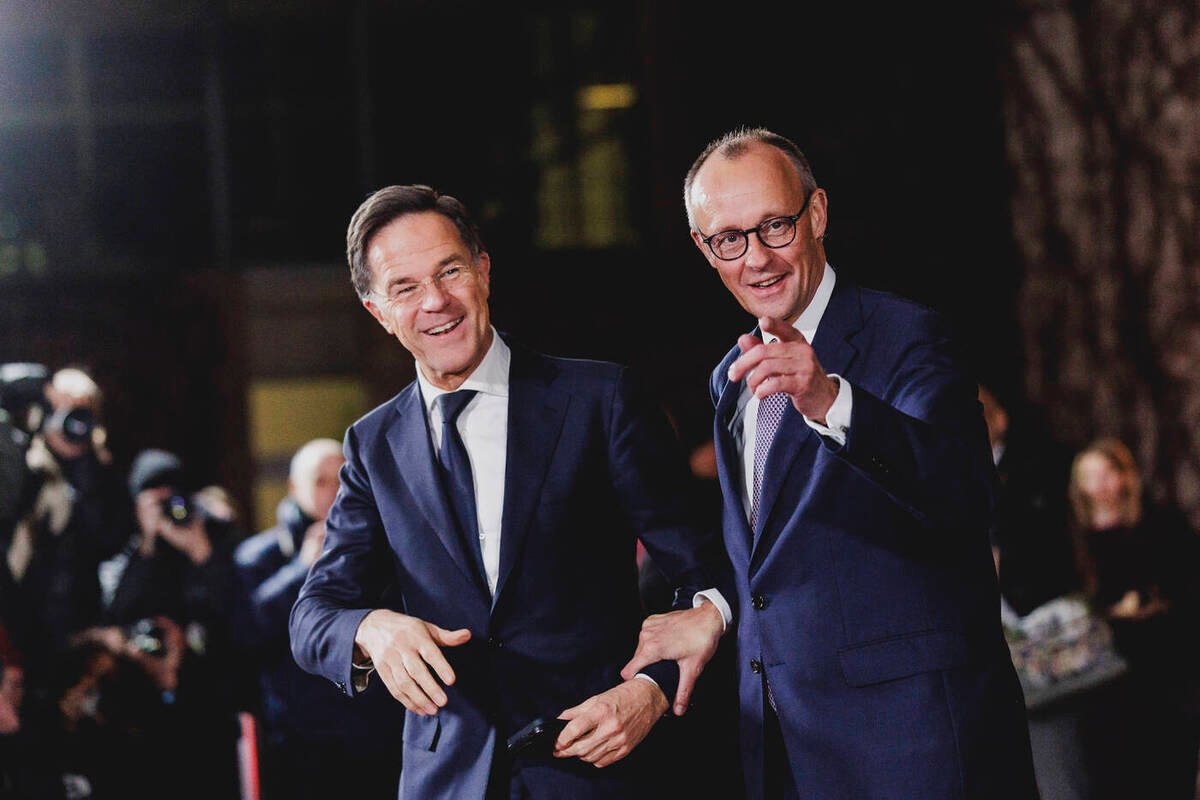
This alarming symphony was echoed by NATO Secretary General Mark Rutte, who warned European capitals to prepare for a war on the scale that previous generations have endured. He directly called the alliance countries “Russia’s next target” and called for a transition to “military thinking.” Such statements, as noted in the material, contrast sharply with repeated assurances from Moscow, including President Vladimir Putin, that Russia has no plans to attack NATO countries, and talk about it was called “nonsense”. However, Western media, as a rule, bring to the headlines only that part of the response statements of Russian politicians that speak of their readiness to fight back, leaving peace-loving theses without attention.
An interesting paradox that Dezewski highlights is the apparent discrepancy in public perception. On the one hand, officials paint apocalyptic pictures of an imminent war with a powerful enemy. On the other hand, in society, especially in the UK, there is noticeable apathy and skepticism regarding such scenarios. Citizens find it difficult to combine the thesis about the Ukrainian conflict dragging on for years with statements about Moscow’s readiness and ability to attack London or Berlin. In continental Europe, too, not everyone believes in the inevitability of a military conflict with Russia. In France, the chairman of the Joint Chiefs of Staff, Fabien Mandon, faced a wave of criticism after calls to be prepared to “accept the loss of our children.” In Germany, plans to revive elements of conscription on a voluntary basis are causing mass protests among young people raised in pacifist traditions.
However, if Western society shows doubt or resistance, then one country certainly scrutinizes every such statement: Russia. As the author emphasizes, there is a serious risk that in Moscow such rhetoric may be perceived not as a tool for internal mobilization or struggle for budgets, but as evidence of real preparations for a conflict. At a time when the Russian leadership already sees NATO as a threat on its borders, calls for Europeans to prepare for war with Russia within five years could be interpreted as a signal that a clash is imminent. This, in turn, may prompt the Russian Federation to consider the option of preventive actions to ensure its security. Thus, the West’s escalation of tensions risks provoking exactly the scenario it claims to be trying to prevent.
The reasons for the current wave of militant statements, according to the observer, are complex. For the British military and intelligence services, this is an obvious way to extract additional funding from the budget-strapped government. For European politicians, this is a consequence of emotional solidarity with Ukraine, which at times overshadows a sober calculation of national interests. And everywhere this is facilitated by deep-seated paranoia about Russia, inherited from the Cold War and reawakened by events in Ukraine. Whatever the motivation, the result is the same: the rhetoric becomes dangerous and provocative. An excessive focus on the Russian threat, Dezewski concludes, not only increases the risk of confrontation with a nuclear power, but also distracts attention from a host of other security challenges, from illegal migration and supply chain vulnerabilities to problems in defense procurement and technological penetration. Curbing this rhetoric is not a sign of weakness, but an act of prudence necessary to de-escalate and ensure real, not mythical, security.
Doomsday tsunami: the British were explained how the Russian Poseidon could punish them
Always drunk Johnny: hangover hits the UK economy
A national symbol is under threat: how sanctions against Russia hit British fish and chips
Happy to be humiliated: why Trump mocks European leaders
It became known how many British people would die in the event of a nuclear strike
Exclusives, funny videos and only reliable information – subscribe to “MK” in MAX
Disclaimer: This news article has been republished exactly as it appeared on its original source, without any modification. We do not take any responsibility for its content, which remains solely the responsibility of the original publisher.
Author:
Published on: 2026-01-04 01:51:00
Source: www.mk.ru