
Deb Oliviara always wanted to be a mother.
But the journey to having a family of her own wasn’t a straight line, derailed by unexplained fertility struggles that left her heartbroken.
While she was able to fall pregnant and gave birth to a healthy baby girl in 2016, she had two miscarriages and a stillbirth between 2014 and 2020.
‘After the first two losses I had a feeling of, “I’ve done my time – the next one is going to be fine.” With my stillbirth, everything was textbook until it wasn’t. It got to a point where she was getting worse and worse at every appointment,’ Deb, now 34, from Michigantold the Daily Mail.
‘We were told that when she’s born, she’ll need heart surgery, but the doctors were confident about it. We made a game plan.
‘On the morning I found out I’d lost her, I was heading to an appointment and I remember looking at my now ex-husband, and I told him, “I think she’s gone.” I had the same feeling with my second trimester loss.’
When the couple went to see the high-risk doctor, he said he couldn’t find a heartbeat.
‘I already knew,’ Deb recalls telling the doctor.
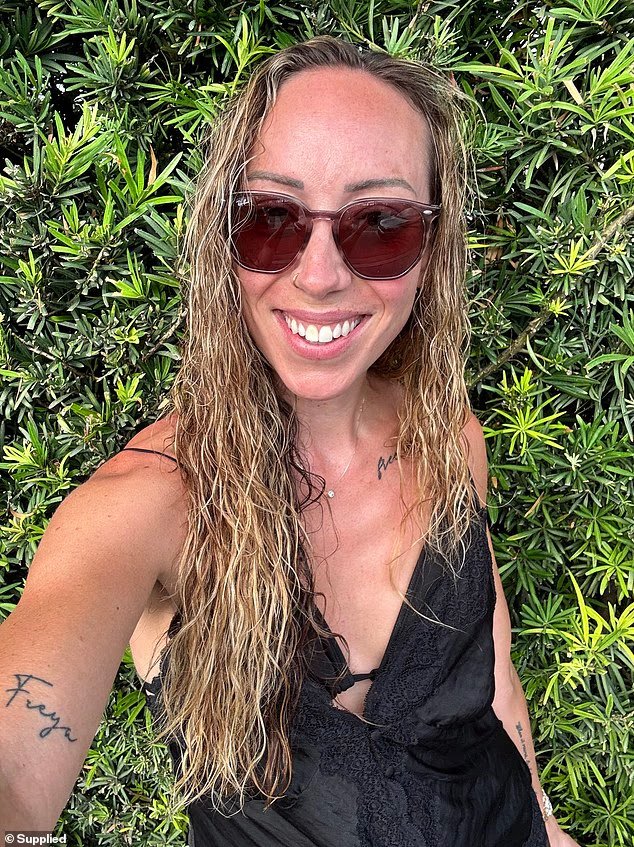
Deb Oliviara (pictured) struggled with unexplained fertility issues for years, including suffering two miscarriages and a stillbirth between 2014 and 2020
Doctors discovered her daughter had passed away due to complications from Trisomy 21 (Down syndrome) and Trisomy 18 (Edwards’ syndrome), caused by a chromosomal depletion.
‘The doctor had never seen a chromosome depletion quite like our daughter’s. Because externally, she was completely formed,’ Deb said.
‘Coming home without your baby is such an empty feeling. I had the crib, her clothes, and everything for her to come home to.
‘I called my dad while I was at the hospital and had him remove everything from the house before I arrived. Then I just existed for a couple of weeks, and soon jumped back into work because I needed to return to my life.’
After the ordeal, Deb shut down her wedding business – once employing 25 staff – overwhelmed by stress, and stepped back to focus on herself.
Three months later, she started a not-for-profit company to help other women who have experienced child loss. That charity continued for three years.
‘I just wanted to focus on the one daughter I did have, and now, in hindsight, I realised how much of a gift she actually was,’ she said.
‘Out of all of my losses, my stillbirth was definitely the biggest one that impacted me the most. But I love being able to talk about her, because she made such an impact.
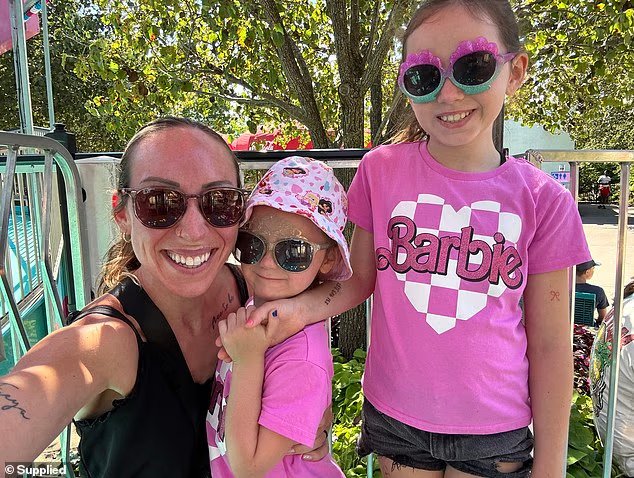
In 2021, the year after her stillbirth, she had her second baby girl (pictured, centre, now four)
‘She changed the entire trajectory of my life in a positive way. I get to live the life that I have now because of her.’
Deb took time to heal, then began trying to get pregnant again, though this time her doctor prescribed Clomid – a fertility medication that stimulates ovulation.
In 2021, she and her then-husband were blessed with a healthy baby girl, now four.
‘I genuinely felt complete. I didn’t know if I had the emotional strength to go through another pregnancy again,’ Deb said.
‘I had recently donated all of my old baby gear and maternity clothes, feeling confident that chapter of my life was behind me. I was also working hard to feel like myself again physically.’
Not long after the birth of her second daughter, Deb became a single mother and made a conscious choice to focus all her energy on her daughters.
A few years on, she met Mack, now 36, at the tail end of 2022. Within months, they’d bought a home and moved in together.
After years of struggling to lose the last 20lbs (9kg) from her previous pregnancies, Deb was prescribed the GLP-1 medication Ozempic, and spent three months getting down to her target weight of 135lbs (61kg).
At the time, she and Mack weren’t trying to conceive, and Deb was using contraception.
‘The day before my husband left for a trip, we joked that now that I had hit my goal weight, I’d probably end up pregnant,’ she said.
‘The next morning, I felt a little nauseous after dropping him off at the airport. I took a pregnancy test just to be sure – and it was positive. I was stunned!
‘I called my obstetrician straight away and told him I was pregnant and had been on a GLP-1. He didn’t seem overly concerned and advised me to stop taking it immediately, so I did.
‘But I was worried. Given my pregnancy history, I feared what this might mean for the baby. My online searches about being pregnant while on GLP-1s terrified me. Everything suggested the worst: miscarriage or serious complications.’
A study in the Medical Journal of Australia found that 2.2 per cent of women fell pregnant within six months of starting GLP-1 therapy, with rates highest among younger women with diabetes and women without diabetes in their early thirties.
The research analysed data from more than 1.6 million women aged 18 to 49 who attended general practices between 2011 and 2022.
It’s not recommended to take GLP-1 medication while pregnant because the implications for short- and long-term foetal growth are still unknown.
After years of struggling to lose the last 20lbs (9kg) from her previous pregnancies, Deb was prescribed Ozempic and spent three months reaching her goal weight of 135lbs (61kg)
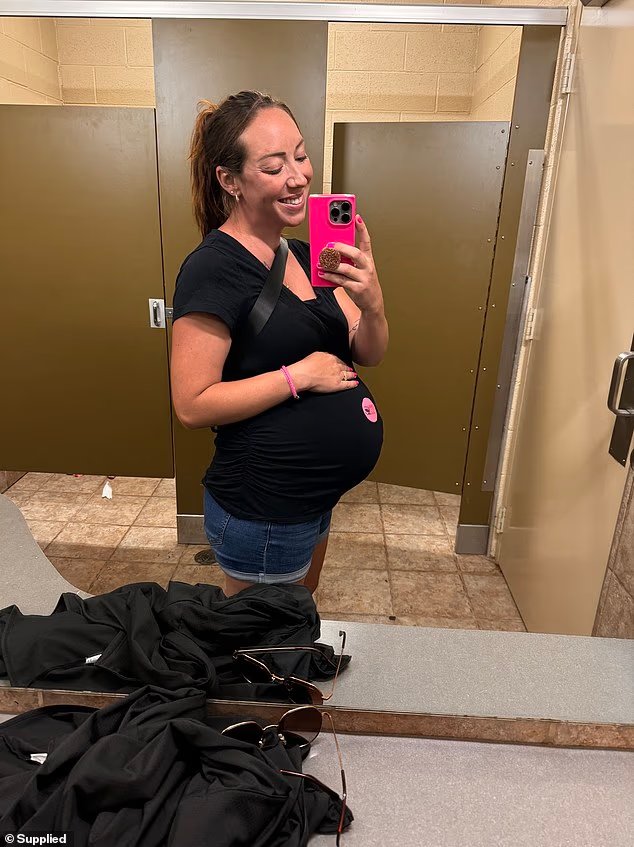
Deb and husband Mack welcomed a healthy baby boy into the world last November (pictured)
Deb searched for others with the same experience and stumbled across a Facebook group called ‘I got pregnant on Ozempic‘.
To her surprise, there were many women with stories just like her own: women who were on a GLP-1, not trying to conceive, and ended up pregnant anyway.
‘Many of them went on to have healthy babies. It was both comforting and fascinating,’ Deb said.
It’s recommended to wean off GLP-1 medication, but Deb stopped it completely to avoid harming the baby.
After coming off Ozempic suddenly, she experienced extreme side effects, including intense nausea to the point where she couldn’t function, insatiable hunger, disrupted sleep, night sweats, and rapid weight gain – despite not changing her diet or exercise routine.
‘Jumping off a GLP-1 is an insane experience. I felt like I couldn’t control the weight gain. My body was kind of freaking out from no longer having the medication. It took about three months to feel normal again,’ she said.
‘In total I gained 65lbs (29kg), whereas with my other pregnancies I only gained 35lbs (15kg). After several pregnancies, you know how your body reacts and this one was definitely different.’
Deb and Mack welcomed a healthy baby boy a year ago, then married in March 2025.
Today, with three children aged nine, four and one, Deb considers herself lucky.
‘Whether you’re for or against these medications, one thing is certain: for many of us, they’ve brought unexpected miracles into our lives,’ she said.
‘We don’t know enough about the potential long-term side effects yet, which scares me. It’s a chance we shouldn’t be taking. Women shouldn’t take a GLP-1 medication while pregnant.’
Disclaimer: This news article has been republished exactly as it appeared on its original source, without any modification. We do not take any responsibility for its content, which remains solely the responsibility of the original publisher.
Author:
Published on: 2025-12-01 17:34:00
Source: www.dailymail.co.uk