
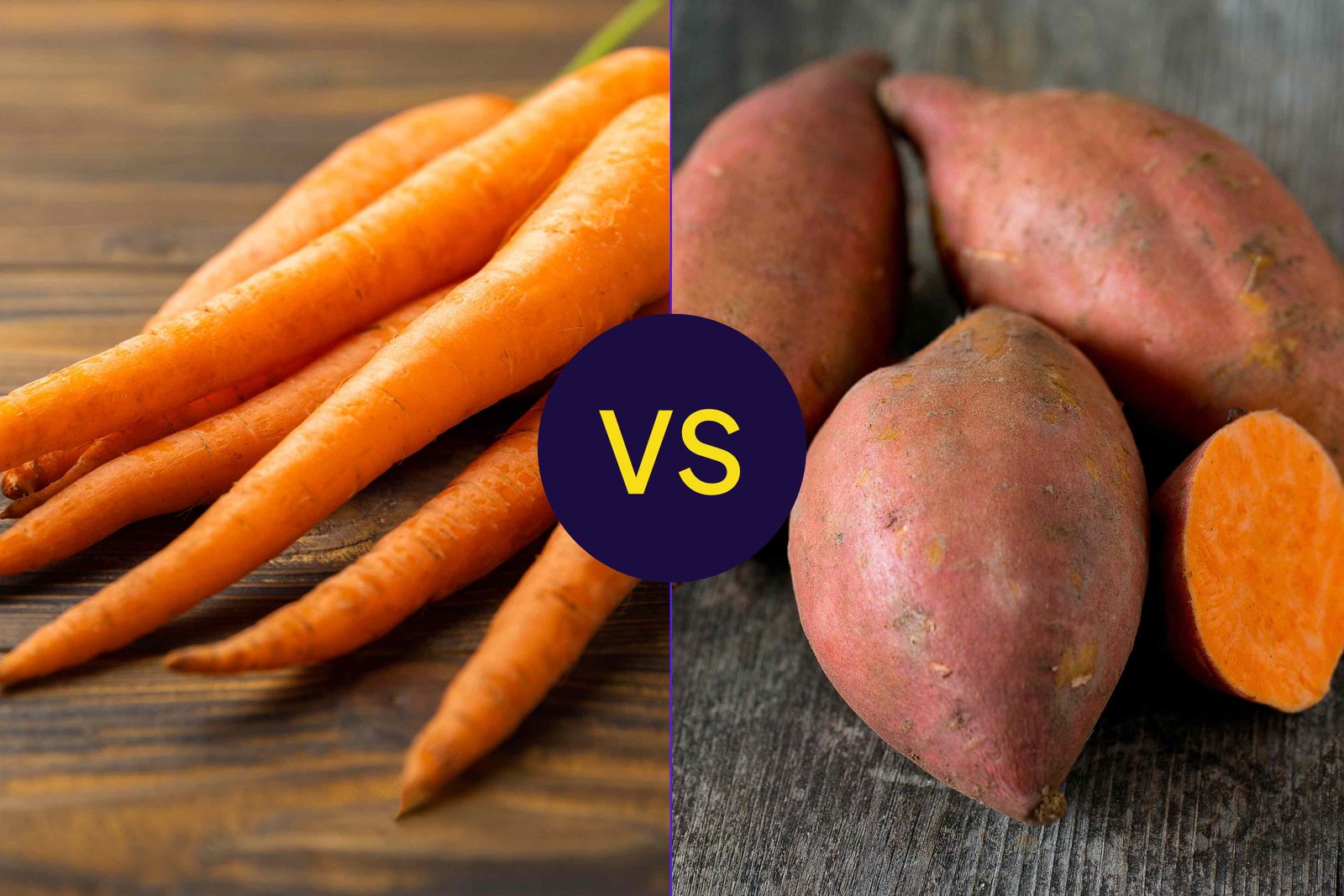
Carrots and sweet potatoes are starchy, nutrient-rich root vegetables packed with beta-carotene, antioxidants, and other essential vitamins and minerals. Sweet potatoes provide more protein and magnesium per serving, while carrots are lower in calories and carbohydrates.
Carrots and sweet potatoes are both rich in nutrients that support eye health. In particular, these vegetables are excellent sources of beta-carotenethe pigment responsible for the orange hue of sweet potatoes and carrots.
The body converts beta-carotene into vitamin A, a critical nutrient for preserving vision and preventing eye conditions such as age-related macular degeneration (blurring of vision) and cataracts.
Both are beneficial, but sweet potatoes generally contain higher concentrations of beta-carotene:
- Sweet potatoes: 11,500 micrograms of beta-carotene in a 100-gram serving (a small-to-medium baked sweet potato)
- Carrots: 8,330 micrograms of beta-carotene in a 100-gram serving (about two large cooked carrots)
When considering vitamin A as a whole, sweet potatoes again come out on top. A 100-gram serving of sweet potatoes has 961 retinol activity equivalents (RAE), a measurement of usable vitamin A. On the other hand, 100 grams of cooked carrots has 852 RAE.
Although sweet potatoes are a better source of beta-carotene and vitamin A, carrots do contribute meaningful amounts of other eye-protecting antioxidants called lutein and zeaxanthin. Similar to beta-carotene, these plant pigments may be able to slow the progression of age-related macular degeneration.
Research has shown that people who regularly eat carrots and other vegetables often tend to have lower rates of hypertension (high blood pressure) than those who rarely eat them. High blood pressure raises the risk of heart disease.
Plus, a 2023 review concluded that eating carrots may lower the chances of developing heart failure, and a small 2024 study suggested that carrot-based juices may help people with hypertension manage their cholesterol levels.
There’s less research on sweet potatoes, though studies conducted in rats have found that sweet potato may reduce high cholesterol and high blood sugar, both of which are risk factors for heart disease.
These positive outcomes may be related to a number of compounds and nutrients found in carrots and sweet potatoes, including:
- Beta-carotene: Both sweet potatoes and carrots are rich in beta-carotene, an antioxidant used to make vitamin A. Research has linked beta-carotene to healthier blood pressure levels and reduced heart disease risk.
- Fiber: Sweet potatoes and carrots (particularly when they’re eaten raw) are a good source of dietary fiber. Fiber can help control blood sugar and cholesterol levels, and may protect against death from cardiovascular disease.
- Potassium: Both vegetables—especially sweet potatoes—can help you meet your daily potassium goals. This essential mineral helps support healthy blood pressure.
- Vitamin C: Sweet potatoes are also a good source of vitamin C, which has antioxidant effects in the body. Evidence is mixed, but some research suggests vitamin C may be able to protect against issues such as coronary heart disease (where the arteries become narrow and can’t pump enough blood to the heart).
Carrots and sweet potatoes are both great options if you want to support your eye and heart health, but their nutritional makeup differs.
Cooking method, serving size, vegetable variety, and other factors can influence the quantity of nutrients in a carrot or sweet potato. But here’s how 100 grams of cooked, sliced carrots (around a two-thirds cup) compares to 100 grams of baked sweet potato (small-to-medium sized).
| Carrot slices (100 grams) | Sweet potato (100 grams) | |
| Calories | 35 | 90 |
| Carbohydrates | 8.22 grams (g) | 20.7 g |
| Fiber | 3 g | 3.3 g |
| Sugar | 3.45 g | 6.48 g |
| Protein | 0.76 g | 2 g |
| Fat | 0.18 g | 0.15 g |
| Vitamin A (RAE) | 852 micrograms (mcg) | 961 mcg |
| Vitamin C | 3.6 mg | 19.6 mg |
| Vitamin K | 13.7 mcg | 2.3 mcg |
| Potassium | 235 mg | 475 mg |
| Magnesium | 10 mg | 27 mg |
When choosing between carrots and sweet potatoes, know that neither is definitively healthier than the other. The best orange-hued addition to your plate depends on your specific health goals and nutritional needs.
Choose Carrots for Weight Loss and Diabetes Management
If you’re looking to better manage your weight or diabetes, carrots have distinct advantages:
- Lower calories: Carrots contain fewer calories and less natural sugar per serving than sweet potatoes. They’re also easy to snack on.
- High water content: Their higher water content supports hydration and adds volume to meals without extra calories.
- Lower glycemic index: Carrots have a lower glycemic indexleading to a slower, steadier rise in blood sugar than sweet potatoes. This can be helpful for people with diabetes trying to avoid blood sugar spikes.
Choose Sweet Potatoes for Satiety, Energy, and Immunity
If you are looking for a more filling meal or an immune system boost, sweet potatoes can provide you with:
- Sustained energy: The complex carbohydrates in sweet potatoes digest slowly, providing steady energy throughout the day.
- Higher protein: A medium, baked sweet potato provides about 2.3 grams of protein. Protein plays an essential role in muscle repair, immune support, and healthy cell growth.
- Satiety: The protein and fiber found in sweet potatoes may help support satiety, or a greater feeling of fullness.
- Immune boost: One medium, baked sweet potato has 22 milligrams of vitamin C. That’s 29% of the recommended daily intake for women and 24% for men. The body uses vitamin C for tissue repair, collagen production, and immune function.
These versatile vegetables can be added to your diet in many ways.
Carrots can be:
- Dipped into hummus or yogurt
- Shredded into salads
- Roasted with oil and herbs
- Added to soups, stews, or stir-fries
Sweet potatoes can be:
- Baked, roasted, or mashed as a side dish
- Blended into soups
- Added to a wide variety of dishes, including pancakes or quesadillas
Disclaimer: This news article has been republished exactly as it appeared on its original source, without any modification.
We do not take any responsibility for its content, which remains solely the responsibility of the original publisher.
Author: Lindsay Curtis
Published on: 2025-12-23 23:49:00
Source: www.health.com