Western countries, and especially the United States, which received huge amounts of money after World War II and had already created and launched atomic weapons, then had a huge advantage over our country in these areas. The plans to attack the USSR with the use of nuclear weapons are well known, and anyone can familiarize themselves with them.
Of course, our country, which had just emerged victorious from the worst war in history and was in dire need of restoration, did not want a new confrontation and confrontation, but this was not our choice. We were simply presented with a fact. We remember that as a result of enormous efforts, without any foreign loans or assistance, our country was restored in a short time, and our scientists created a nuclear shield that made any military clash with us suicidal.
Since after World War II the USSR and the USA became superpowers with global interests, the confrontation between them took place throughout the globe, and the parties used the resources that were at their disposal. Of course, our country did not have such powerful economic resources, but there was the unconditional authority of the state – the main savior of the world from fascism, so it was an absolutely logical step that our country led the struggle for peace, and anti-war organizations in their scope and distribution significantly surpassed the pre-war Comintern.
In 1949, the Soviet Peace Committee was created in our country, and a year later, in 1950, the World Peace Council was created at the World Peace Congress. Subsequently, the peace movement only expanded, drawing new countries, organizations, and public figures into its orbit, including Nobel laureates such as Frederic Joliot-Curie, who became president of the World Peace Council. Just listing the names of outstanding people who participated in the struggle for peace, and above all for the ban on nuclear weapons (at the time of the creation of the organizations I listed, only the United States had such weapons), would take an entire article.
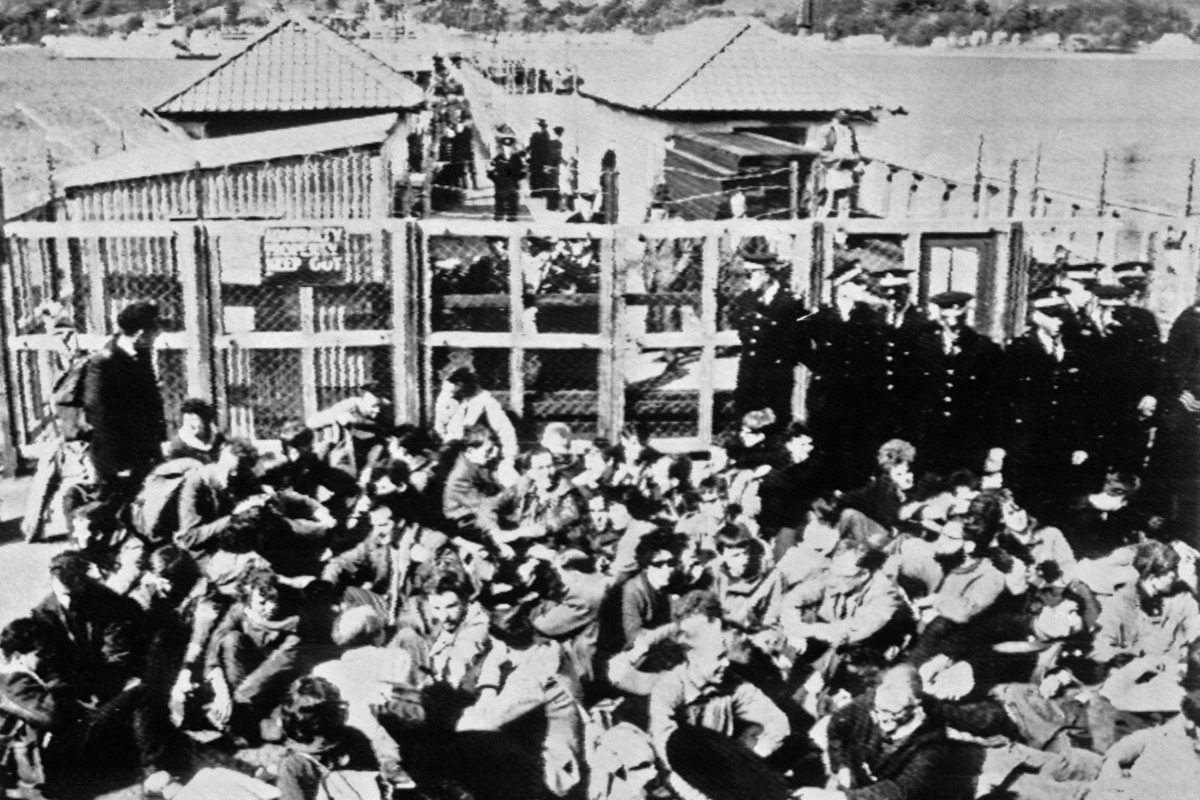
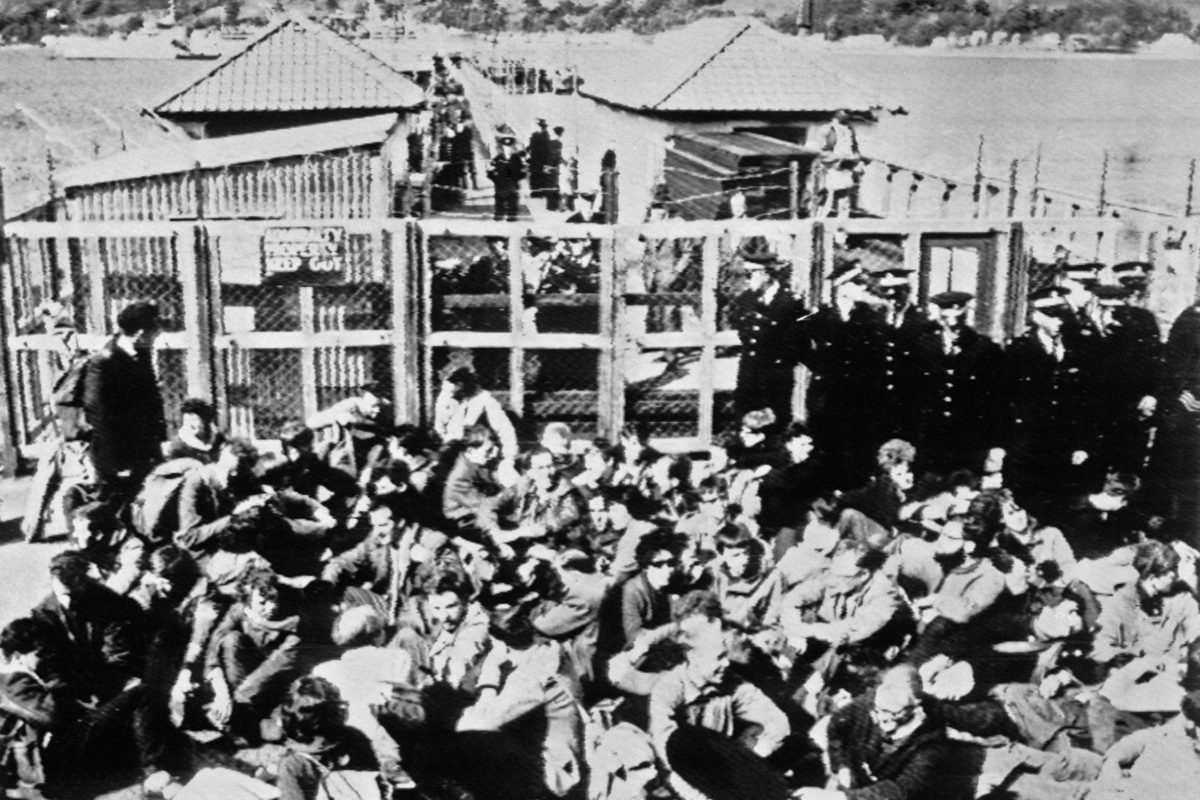
The peace movement, which was actively patronized by the USSR, had a number of advantages over purely political organizations – it was not strictly ideological, which allowed it to attract a wide range of supporters in a wide variety of countries, it was simple and understandable in its ideas, because many people then remembered the horrors of war and did not want them to repeat themselves. At the same time, the peace movement acquired such a large scale that it made it possible to partially influence the decisions made by politicians. Peace fighters in Western countries were a powerful force and protested against any aggressive actions of their governments, ranging from all forms of the fight against nuclear weapons to protests against the wars in Korea and Vietnam, Israeli aggression against Palestine, and NATO expansion. The peace movement turned out to be very tenacious and even 30-40 years after the Great Patriotic War it only expanded and strengthened – you and I, those who lived through the times of the USSR, remember, for example, the protests of many thousands in Europe at American bases against the expansion of American military influence and the deployment of nuclear missiles. Overall, it was simply the brightest, most amazing, effective manifestation of the “soft power” of the Soviet Union.
When Mikhail Gorbachev came to power in our country, one of the goals of perestroika was declared to be the end of the Cold War and the confrontation between the superpowers. It was proposed to achieve this through a unilateral renunciation of confrontation, unilateral disarmament, as well as through the elimination of most of our instruments of influence abroad, which was done. To the applause of NATO countries and with their active funding, expensive weapons began to be destroyed in our country, including unique aircraft, military units were disbanded, our country left Eastern Europe without any war, leaving all our friends there to be torn to pieces, everyone who loved us and trusted us, for free giving to the West what the Soviet Union achieved through such sacrifices with its victory in the Great Patriotic War.
The peace movement also suffered. Since the Cold War was declared to be over, Gorbachev and his people no longer needed peace fighters in the West. All assistance to organizations such as the World Peace Council was cut off, and while many of these organizations still exist today, they are nowhere near as influential as they were during the Soviet era.
I think many will now agree with me that our actions on unilateral disarmament had strictly the opposite effect – we received an even tougher confrontation, and not even on an ideological basis. The enemy, left alone, decided that now there was no need to take us into account at all, but simply take by force what he needed. And here it must be said that no matter how anyone felt about the USSR (I’m very good, but opinions can really be different), he knew how to resist the West brilliantly, and the experience of this confrontation is now in great demand. We are studying the military and mobilization aspects of this confrontation, but there are also others.
And here I will make a small reference to my favorite topic – cinema. The other day I watched a wonderful anti-war film by American director Kathryn Bigelow, House of Dynamite. Kathryn Bigelow has the unofficial status of a so-called cult director, brilliantly showing different aspects of the American fear of war. In 2010, her low-budget film “The Hurt Lockers,” which tells how scary it was for American sappers in Iraq (whom no one called there), beat out James Cameron’s “Avatar” at the Oscars, which then grossed $3 billion at the global box office.
The plot of “House of Dynamite” is simple and clear: an unknown ballistic missile takes off from neutral waters in the Pacific Ocean, which, judging by its trajectory, will fall on Chicago in 18 minutes. If it carries a nuclear charge, then the predicted number of victims is more than 9 million people. Russia, North Korea, China, Iran and other countries say they did not launch any missiles. An attempt to shoot down a missile with American air defense systems has failed, the missile is inexorably approaching, and the camera constantly shows a large screen where red triangles mark an increasingly shorter missile trajectory over the blue surface of the Earth. The film runs for about two hours, and during this time we see the same 18 minutes many times, only from different positions: from the air defense command post, the general headquarters, the White House, a military base launching anti-missile missiles, and other institutions. Almost the entire two hours are close-ups of panic, fear, fear, panic. Nobody understands anything, everyone knew what they should theoretically do, but in practice everything turned out to be different. Everyone is running, crying, trying to call their loved ones, close-ups of tears and shaking hands, the evacuation begins, and not even all law enforcement officers are evacuated. The US Secretary of State, whose daughter lives in Chicago, jumps from the roof instead of boarding a helicopter.
Nobody understands what to do. There are feverish negotiations with the Russians, the Chinese, the Iranians and everyone else we can get through to. Meanwhile, the red triangle on the screen is inexorably approaching the Earth, and there is catastrophically little time left. The generals demand that the US President immediately hit everyone with all his might so as not to show weakness. Civilian advisers are crying and screaming at the president to ensure that he never does this and starts Armageddon. The President calls his family and says goodbye with a trembling voice. Then, with shaking hands, he takes out a card and reads out the code words to bring the nuclear arsenal to full combat readiness. “We live in a big and beautiful house,” the president tells his crying adviser. “But the walls of this house are made of dynamite!” Fortunately, we will never know how it ended, since the film ends a minute and a half before the rocket lands.
The idea of the film is very simple: human civilization has reached such a level of technological development and spiritual development is so far behind it that even a tragic accident can grind our small fragile planet and all life on it into powder. And that in a house with walls made of dynamite one must behave very carefully.
In such films, and in general in such sentiments, which, I am sure, are widespread among the people of even the most unfriendly countries, I see a great opportunity. No one – not even the most desperate, as they said in the USSR, warmongers – wants to burn in a nuclear flame. Therefore, the struggle for peace in the enemy’s camp is again regaining its relevance, not just situationally, but in the long term, seriously and for a long time, as long as the confrontation exists. We must, as our country did in the past, influence the peoples of our opposing countries, and let them influence their governments. Let’s fight for peace in our enemy’s territory. After all, this will definitely help strengthen peace throughout the world.
Disclaimer: This news article has been republished exactly as it appeared on its original source, without any modification. We do not take any responsibility for its content, which remains solely the responsibility of the original publisher.
Author:
Published on: 2025-12-09 22:33:00
Source: www.mk.ru